

Engineering Logs · Hà Nội · Backend & CloudVol. 2026

Engineering Logs

Long-form notes on backend systems: the problem, the numbers, the design, and the trade-offs I would defend in a review. Grounded in the systems I have built.

9 entries

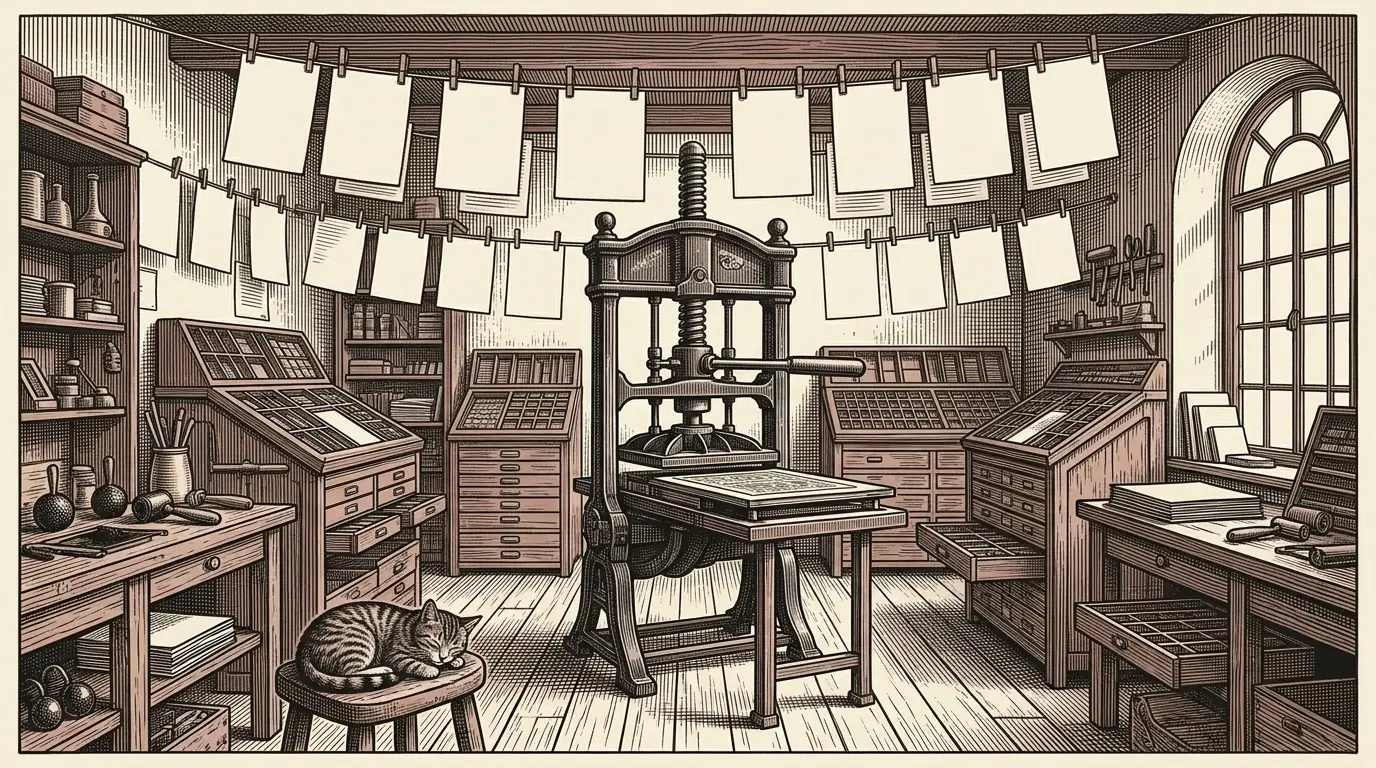
Frontispiece. The print shop, where every log is set by hand.

Latest

No. 0915 min read

100,000 views a second hit one MySQL row

A video goes viral and every viewer runs the same harmless line: views = views + 1. The CPU stays idle and the database still dies. Why one hot row serializes everything, the arithmetic that caps it near 1,000 writes a second, three ways out, and the one place you must never use them.

  • system-design
  • mysql
  • redis
  • kafka
  • concurrency
Read the log →

Catalogue

No. 0816 min read

Designing a clinic booking system that never double-books

Two patients tap the same 9:30 slot in the same millisecond. Only one of them may win, every time, even at 7 a.m. when a whole city opens the app. Requirements, numbers, schema, four ways to guard the invariant, and what breaks first when traffic spikes.

  • system-design
  • postgresql
  • concurrency
  • redis
No. 0716 min read

One missing index, one stalled system, and the road to deadlock

A harmless-looking DELETE froze a whole table because a foreign key had no index. Why a lock is only as narrow as the index behind it, what two-phase locking really means (it is not locking twice), how deadlocks are born and detected, and the retry loop every ORM user owes the database.

  • databases
  • locking
  • deadlock
  • indexing
  • postgresql
No. 0613 min read

When the leader dies: failover, split brain and two ATMs

A 10-million account, a network cut in half, and two leaders who each approve a 10-million withdrawal. Why more followers do not scale writes, what the three steps of failover are, the three ways automatic failover goes wrong, and why a quorum is the way out.

  • distributed-systems
  • replication
  • failover
  • consensus
No. 0519 min read

LSM-Tree, B-Tree, Clustered: three words, three different questions

I mixed these three up for years, and the mix-up was always the same: I treated three answers as if they were one. How a database writes to disk, how it searches, and where the row actually lives are separate questions. Plus the part that decides whether your query is fast: the optimizer, its statistics, and why a full scan can be the right plan.

  • database
  • indexing
  • b-tree
  • lsm-tree
  • ddia
No. 0416 min read

Don't trust the average

The dashboard says 150 ms and the green light is on, yet users keep writing “the app is laggy”. Why averages hide the pain, what p50, p99 and p999 actually say, the 63% arithmetic that turns a healthy service into a slow page, how to compute percentiles without fooling yourself, and what to tell your boss.

  • performance
  • latency
  • percentiles
  • observability
  • ddia